As the cruising range of electric vehicles surpasses 600 kilometers, charging efficiency remains the biggest bottleneck restricting industry development. Traditional charging stations’ bulky, line-frequency transformers not only occupy large spaces but also cannot handle the instantaneous high-power impact on the power grid.
From Iron Core to Silicon Chip: The Technical Revolution of Solid-State Transformers
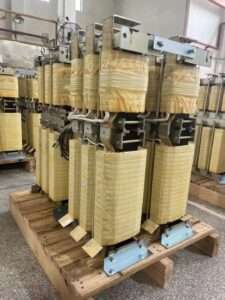
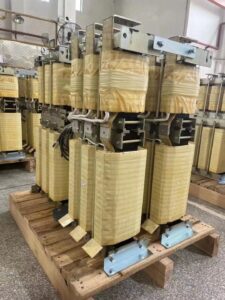
The traditional transformer, born in 1885, operates based on silicon steel cores and windings; this century-old structure is being fundamentally rewritten by power electronics technology.
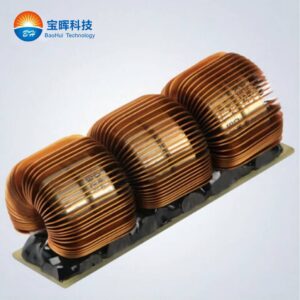
The concept of a “three-stage” Solid-State Transformer (SST), first proposed by a Scottish scholar in 2001, uses high-frequency switching conversion combined with a high-frequency isolation transformer to reduce the equipment volume to 1/5 of a traditional transformer. The latest 1MW-class SST charging station employs an innovative combination of cascaded H-bridge and four-quadrant active bridge converters, allowing direct connection to the 22.9kV medium-voltage grid, enabling coordinated operation of five charging ports and an energy storage system.
Smart Grid Solutions for Multi-Channel Fast Charging
Laboratory tests show that this 1MW SST system can increase charging efficiency by 300%.
The core breakthrough is decomposing the energy conversion process into multi-stage transformations: “AC-DC-High-Frequency AC-Low-Frequency AC/DC” , allowing each charging port to independently control power output.
- When the grid load surges, the built-in energy storage system can instantly respond to buffer the power.
- During off-peak hours, it can actively store electricity, realizing true Vehicle-to-Grid (V2G) functionality.
This dynamic regulation capability reduces local grid voltage fluctuations by 40%, providing stable assurance for high-density charging scenarios.
Key Hub for the Future Energy Network
The significance of SSTs extends far beyond faster charging.
- Their bidirectional energy flow characteristics make them an ideal interface for connecting distributed energy sources.
- Intermittent sources like solar and wind power can achieve smooth grid integration through SSTs.
- A pilot project in North America confirmed that microgrids equipped with SSTs had their power supply reliability increased to 99.99% during extreme weather.
With the maturity of wide-bandgap semiconductor devices like Silicon Carbide (SiC), the losses of the next generation of SSTs are expected to decrease by another 50% , which will completely reshape the energy system from power distribution to utilization. Solid-State Transformers are paving the electrical superhighway for the smart grid’s future.