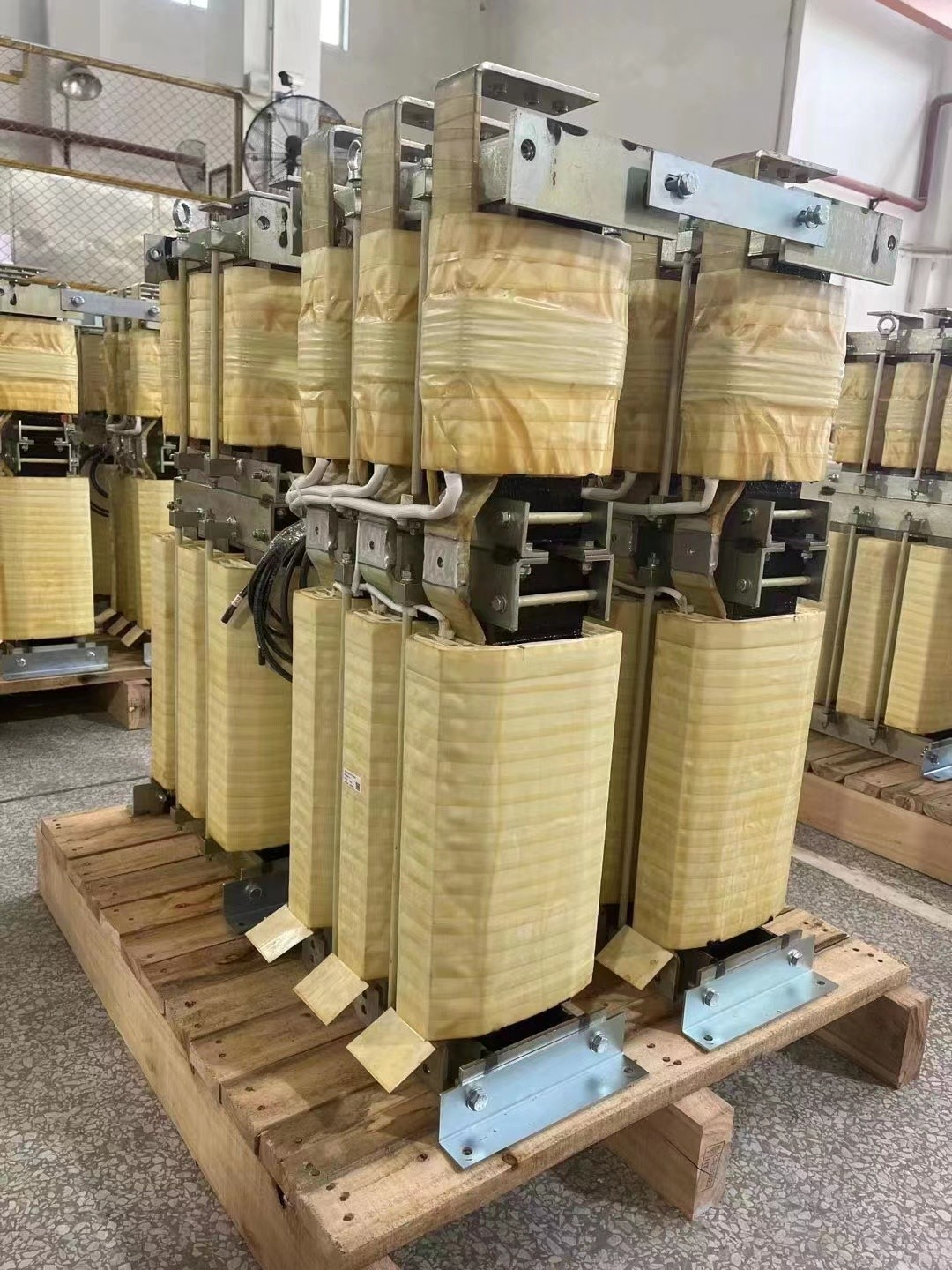
I. The Technical Revolution: From Iron Core to Silicon Chip
The traditional transformer, born in 1885, relies on a century-old structure of silicon steel cores and windings. This design is now being fundamentally rewritten by power electronics technology.
The Solid-State Transformer (SST), also known as a Power Electronic Transformer, is a new power conversion device that utilizes advanced power electronic conversion and high-frequency magnetic coupling to achieve the basic functions of a transformer. It replaces the traditional electromagnetic induction principle with semiconductor switches (such as IGBT, SiC MOSFET) and high-speed control circuits.
The “three-stage” SST concept, first proposed in 2001, uses high-frequency switching combined with a high-frequency isolation transformer to reduce the equipment volume to 1/5 of a traditional transformer.
Working Principle Comparison
| Feature | Traditional (Electromagnetic) Transformer | Solid-State (Power Electronic) Transformer |
| Working Principle | Electromagnetic Induction (Faraday’s Law) | Power Electronic Conversion + High-Frequency Magnetic Induction |
| Operating Frequency | Line Frequency (50/60 Hz) | High Frequency (KiloHz to hundreds of KiloHz) |
| Core Components | Silicon Steel Core + Copper/Aluminum Windings | Power Electronic Switches + High-Frequency Transformer + Capacitors + Digital Controller |
| Energy Form | AC → AC | AC → DC → High-Frequency AC → Desired AC or DC/AC |
Key Advantage: Volume Reduction
The SST uses a high-frequency transformer. According to the formula $V=4.44 \cdot f \cdot N \cdot B \cdot A$, higher operating frequency ($f$) allows for smaller core cross-section ($A$) and fewer winding turns ($N$)8. This allows the SST’s core transformer element to be tens of times smaller than the traditional model9.
II. Features, Advantages, and Breakthroughs
SSTs are more than simple converters; they are intelligent power systems10101010.
- Small Size, Light Weight: The most intuitive benefit, achieving equipment miniaturization11.
- Multi-Function Integration: Naturally provides both AC and DC ports, making it ideal for future hybrid grids integrating PV, energy storage, and DC appliances12.
- Superior Power Quality Regulation: SSTs can actively regulate output voltage amplitude and phase, suppressing voltage sags, surges, and harmonics to deliver “quality power”13. Traditional transformers passively transmit energy and can amplify grid disturbances14.
- Achieves Power Flow Control: By controlling its power electronic switches, the SST can flexibly and rapidly control the magnitude and direction of active and reactive power flow, acting as an “intelligent valve”15.
- Strong Fault Isolation: SSTs can quickly cut off fault currents using their fast switching capability, protecting the grid and user equipment16.
III. Smart Grid and Industrial Applications
The significance of SSTs is most evident in next-generation power systems.
EV Fast Charging and V2G
Traditional bulky transformers are the biggest bottleneck for high-power EV fast charging17.
- A 1MW SST system can increase charging efficiency by 300%18.
- The system decomposes energy conversion into multi-stage transformations (AC-DC-High-Frequency AC-Low-Frequency AC/DC)19.
- V2G Functionality: Built-in energy storage can instantly respond to buffer power during load surges or store energy during off-peak hours, realizing true Vehicle-to-Grid (V2G)20.
- Grid Stability: Dynamic regulation reduces local grid voltage fluctuations by 40%21.
Key Hub for the Future Energy Network
- Distributed Energy Interface: The bidirectional energy flow characteristic makes SST an ideal interface for connecting distributed energy sources like solar and wind power, enabling smooth grid integration22.
- Reliability: Microgrids equipped with SSTs have demonstrated power supply reliability increased to 99.99% during extreme weather in pilot projects23.
- Other Key Applications: Smart grids (as energy routers) 24, rail transit (reducing substation volume) 25, new energy systems (efficient connection) 26, data centers (high-quality DC power) 27, and ship integrated power systems28.
- Future: With the maturity of wide-bandgap semiconductor devices like Silicon Carbide (SiC), the losses of the next generation of SSTs are expected to decrease by another 50%29.
IV. Challenges
Despite the advantages, SSTs face several hurdles30:
- High Cost: Manufacturing costs are significantly higher than traditional transformers due to the use of a large number of expensive power semiconductor devices and complex control systems31.
- Reliability Issues: The lifespan and reliability of power electronic devices are currently inferior to traditional transformers (which can last 30-40 years)32.
- Control Complexity: Requires highly complex digital control algorithms to coordinate numerous switching devices33.
- Efficiency: Current efficiency (typically 95%-98%) is slightly lower than high-efficiency traditional transformers (over 99%) due to energy loss in multiple conversion stages34.