
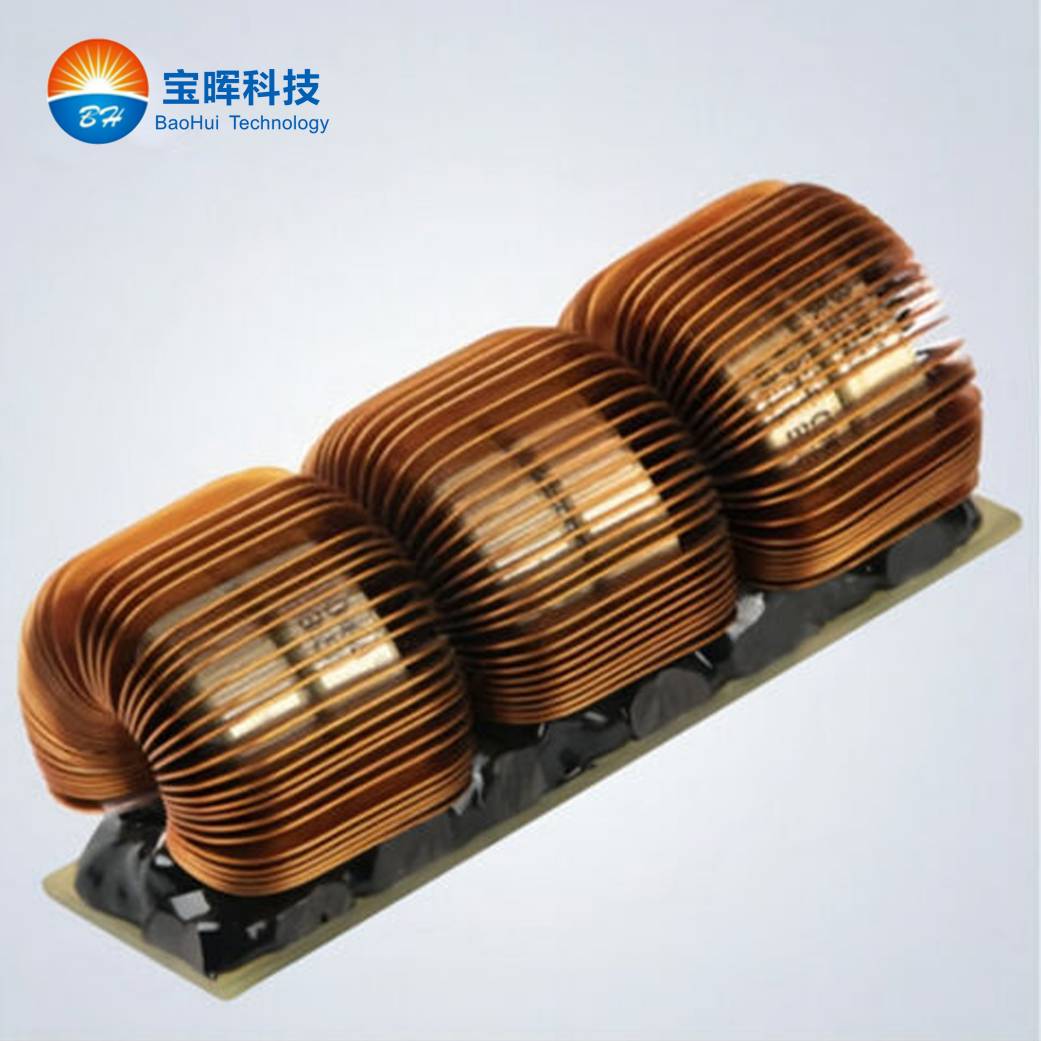
Differential mode inductors filter out differential mode noise through high inductive reactance, guaranteeing pure signal transmission for power supplies, audio, and communication equipment.
Did you know? As we enjoy stable power supplies, clear audio experiences, and smooth data transmission, we rely on an inconspicuous yet crucial component behind the scenes—the differential mode inductor. This small accessory, working silently on the circuit board, constantly protects electronic equipment from electromagnetic interference.
Working Principle and Core Characteristics
A differential mode inductor is a special inductor designed specifically to suppress differential mode high-frequency interference, also known as a differential mode choke coil. Its core function lies in creating high inductive reactance against differential mode noise, thereby effectively filtering out interference signals. When differential mode high-frequency interference attempts to pass through the circuit, the differential mode inductor exhibits strong “resistance,” while having almost no effect on the low-frequency normal operating current.
The essential characteristic of differential mode noise is interference current flowing in opposite directions on two lines; this type of interference is often generated by switching devices and transformers within the circuit. The differential mode inductor forms a loop in series with an X-capacitor. Utilizing the inductor’s high impedance to high-frequency interference combined with the capacitor’s low impedance to high-frequency interference, they jointly construct a solid “filter net,” blocking differential mode interference noise from entering the circuit.
Application Scenarios in Various Circuits
- Switching Power Supply Circuits: The differential mode inductor plays an irreplaceable role here. It is typically installed at the power input terminal, forming an efficient filter network with an X-capacitor to significantly purify the power signal and reduce the impact of differential mode clutter on subsequent circuits. Power engineers select appropriate inductance values based on the application, as the inductance directly determines the degree of attenuation for differential mode signals at different frequencies.
- Audio Circuits: These circuits have extremely high requirements for signal purity, and the differential mode inductor acts as a “noise reduction expert”. It effectively reduces differential mode noise during audio signal transmission, ensuring the fidelity of the sound signal. When selecting these inductors, engineers must carefully consider their frequency response characteristics, which is a key indicator of inductor performance.
- Communication Circuits: These are more sensitive to signal integrity, making the differential mode inductor a “bodyguard” for signal transmission. It ensures accurate signal transmission and reduces the impact of differential mode interference on communication quality. In high-end communication equipment such as 5G base stations, the layout and selection of differential mode inductors often require repeated testing and optimization.
Differences and Coordination with Common Mode Inductors
Although both differential mode and common mode inductors are used to suppress electromagnetic interference, there are fundamental differences in their structure and working principles.
- Common Mode Inductors: Consist of two sets of coils wound in opposite directions on the same iron core. They excel at handling interference appearing in the same direction on both lines.
- Differential Mode Inductors: Feature a single coil structure and target interference signals that are opposite between lines.
In actual EMC (Electromagnetic Compatibility) design, engineers often combine both types of inductors to create a complementary effect. In a typical filter circuit, the common mode inductor is first connected in series at the power line entrance to suppress common mode interference, followed by the differential mode inductor working with an X-capacitor to further filter out differential mode noise. This combination can simultaneously cope with both types of interference, significantly improving the electromagnetic compatibility performance of the equipment.
Material Selection and Design Considerations
Magnetic Core Selection The choice of magnetic core material has a decisive impact on the performance of the differential mode inductor. Currently, there are three main magnetic core materials on the market:
- Sendust (Iron-Silicon-Aluminum) Magnetic Powder Cores: Widely used in the civilian field due to lower costs.
- Iron-Nickel 50: Used in military occasions or scenarios with higher requirements for volume and performance.
- MPP (Iron-Nickel-Molybdenum) Magnetic Powder Cores: Also used in high-performance/military applications due to higher costs.
Design Parameters When designing differential mode inductors, engineers must consider several key parameters: inductance, rated current, DC resistance, and temperature characteristics. The rated current is particularly important because if overload current causes the core to saturate, the filtering performance of the inductor will drop sharply. Additionally, the packaging form and heat dissipation capability of the differential mode inductor need to be optimized according to the specific application environment.
Conclusion
From smart homes to aerospace, and from medical equipment to industrial controls, differential mode inductors have permeated every corner of modern electronic technology. It is precisely these seemingly simple components that build the first line of defense against interference for electronic equipment, ensuring the reliable operation of the various electronic products in our daily lives.